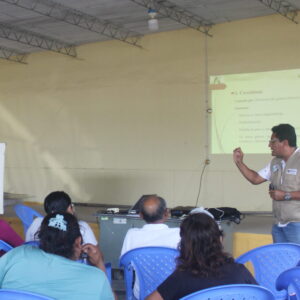
Two successful workshops were held to train small farmers in improving livestock breeding practices in October, focusing on sheep and goat health and reproduction. The workshops took place in two communities: Jatanca and Tecapa. The first workshop in Jatanca saw a strong community turnout, reflecting the local farmers’ eagerness to learn. The second workshop, held in Tecapa, extended its reach to nearby towns, including Tecapa, Santonte, Santa María, and Pueblo Nuevo, engaging a wider audience.
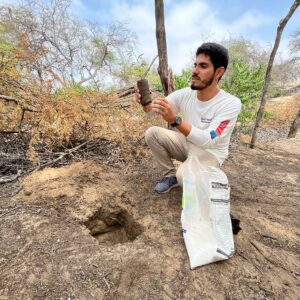
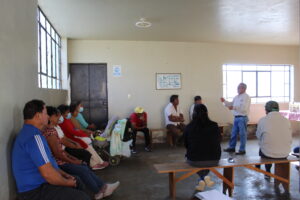
Veterinarian Martín Zambrano in a livestock workshops (October, 2024)
The central theme of the workshops was “Health and Reproduction in Sheep and Goats,” a critical area of knowledge for farmers looking to enhance their livestock production. Veterinarian Martín Zambrano, an expert in the field, led the sessions, offering practical advice and technical insights to improve livestock management. He emphasized the importance of proper breeding techniques, disease prevention, and overall animal care.
These workshops did not just impart valuable technical information; they also sparked greater interest and commitment from the farmers to apply these practices in their herds. By equipping farmers with the knowledge to improve breeding practices, these workshops contribute to the long-term sustainability of livestock farming in the region, fostering healthier herds and more productive farming practices.
The 16th Conference of the Parties (COP16) to the Convention on Biological Diversity (CBD) took place in October 2024 in Cali, Colombia. This event marked a pivotal moment in global efforts to protect biodiversity, as ecosystems are collapsing and species are disappearing at an alarming rate. A Rocha actively participated in COP16, bringing a unique Christian perspective to the global conservation conversation. Representatives from A Rocha International, A Rocha Ghana, A Rocha India, and A Rocha Peru were present to influence policy, build partnerships, and advocate for the protection of creation.
One highlight of A Rocha’s involvement was the event titled “Green Muscle Memory: Addressing Global Challenges.” This session shared inspiring stories of transformative environmental education from A Rocha’s global projects and demonstrated how experiential learning fosters long-term environmental stewardship in communities around the world. The recording can be viewed here, starting at 6:47:00.
A Rocha Peru also contributed to COP16 by participating in the inauguration of the Peru Pavilion. Sarah French, ARI’s Director of Environmental Education and Conservation Policy, along with Maria Los Angeles La Torre Cuadros, A Rocha Peru’s Chair of the Board of Directors, highlighted the organization’s ongoing efforts in environmental education and conservation.
A Rocha’s Christian perspective was essential, reminding everyone of our moral responsibility to care for God’s creation. As COP16 progressed, we remained hopeful for meaningful agreements that would protect biodiversity for future generations, and we continue to pray for effective solutions for environmental conservation.
A Rocha Peru proudly participated in the inauguration of a new garden on October 9 at Elim Christian School, in the Mi Peru neighborhood of Ventanilla. This vibrant green space enhances the school’s surroundings while improving safety in the area, showcasing a commitment to environmental stewardship.
The inauguration event was a festive occasion that engaged students in various activities, including an environmental care trivia quiz. The highlight for many was the chance for younger children to plant their own seedlings in the newly created garden. This hands-on experience not only connected the children to nature but also instilled a sense of responsibility and ownership for their environment.
A Rocha Peru’s initiative represents a significant step toward fostering a culture of sustainability within the school community. It emphasizes the importance of nurturing both the earth and the hearts of the younger generation.
Reflecting on the day, Grazia Rabasa shared her heartfelt testimony: “This visit reminded me that each seed planted—both in the earth and in the hearts of these children—has the potential to grow and transform. Seeing their happy faces as they planted with their own hands was an unforgettable experience. They are the future, and every plant they nurture serves as a reminder of our responsibility to the environment.”
Grazia’s words encapsulate the essence of the event: the work done today impacts not only the soil but also the consciousness of the young ones who will carry forward a legacy of love and respect for creation. The garden stands as a symbol of hope, growth, and the vital connection between education and environmental care.
The Creation Care course wrapped up with great enthusiasm on Sunday, November 10, at the Cristo Rey Presbyterian Church in Huanta, Ayacucho. The event marked the end of a transformative learning journey where young members of the congregation dedicated themselves to the care of creation and environmental stewardship. Throughout the course, these young volunteers led impactful initiatives, including a river cleanup along the Chaquihuaycco River, demonstrating their commitment to protecting the natural resources in their community.
The closing ceremony was a joyful occasion, with the entire congregation coming together to celebrate the achievements of the course participants. It was a moment to recognize the hard work, passion, and dedication of the 14 young volunteers who completed the program. During the ceremony, each of them was awarded a certificate, honoring their contributions to environmental conservation and their active participation in the church’s ecological initiatives.
Ramón Casana, Executive Director of A Rocha Perú, and Grazia Rabasa, Communications Assistant, attended the event and delivered inspiring words to the participants. They expressed their gratitude and admiration for the volunteers’ commitment and encouraged the congregation to continue being a model of environmental leadership in the region. A Rocha Perú, known for its work in environmental education and conservation, has supported the course from the beginning, reinforcing the importance of environmental responsibility within faith communities.
The ceremony concluded with heartfelt words of gratitude and a joint prayer, bringing together the congregation in a moment of unity and reflection. The Creation Care course has not only raised awareness about environmental issues but has also instilled a sense of hope for a more sustainable future. It serves as a reminder of the power of local communities to make a difference in the world, one small action at a time.
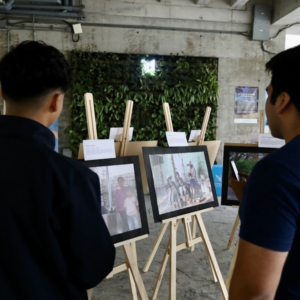
A Rocha Peru has harnessed the power of photography to engage the public and raise awareness about the La Libertad Dry Forest Project, which seeks to conserve this unique ecosystem in northern Peru. Over the past two years, we have successfully organized several photo exhibitions in Pacasmayo. In 2022, A Rocha Peru held three exhibitions at local schools, reaching 1,105 participants. In 2023, the initiative expanded to four venues, engaging 111 individuals and targeting academic and cultural audiences to promote conservation awareness.
UTEC students enjoying A Rocha Peru’s photo exhibition (G. Rabasa, Nov 2024)
In 2024, A Rocha Peru is broadening its national reach with exhibitions in Lima at two key universities—Universidad Científica del Sur (UCSUR) and Universidad de Ingeniería y Tecnología (UTEC)—with which we have established strong collaborations. The exhibition, inaugurated on November 18th at UTEC, was a resounding success, with attendees expressing a keen interest in conservation.
The exhibition features a carefully curated selection of around 20 striking photographs that capture the biodiversity, environmental challenges, and the role of local communities in the La Libertad region. Taken by South African photographer Xavier Saer and other conservationists, these images showcase A Rocha Peru’s ongoing efforts, inspire student participation, and raise awareness about the urgent need to combat deforestation. The exhibition also highlights A Rocha Peru’s smaller initiatives, such as the Amazon Natural and Cultural Heritage Conservation Project and the Iglesia Verde Project.
We extend our gratitude to UTEC and UCSUR for their invaluable collaboration in bringing this exhibition to life. By using photography as a tool for education and advocacy, A Rocha Peru aims to inspire greater engagement in conservation efforts and help secure the future of the La Libertad Dry Forest for generations to come.
A Rocha Peru organized handicraft workshops for the local women’s artisan group in Pacasmayo. The workshops focused on using renewable materials, promoting environmental awareness, and providing alternative sources of income. By linking traditional crafts to the health of the forest, these workshops encourage environmental stewardship and highlight the importance of sustainable resource management.
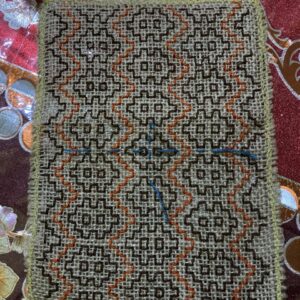
In August, the team organized two workshops for the Artisan Group. The first workshop introduced participants to the art of embroidering jute, a natural fiber, using designs inspired by the Moche culture. The Moche culture is an ancient civilization from northern Peru renowned for its intricate art and iconography. Seven participants took part in this training, led by jute embroidery specialist. The session included an additional hands-on experience in Magdalena de Cao, located in the province of Ascope, to further enhance their skills.
Jute embroidery, August 2024
A second workshop focused on the recycling, reuse, and proper disposal of plastic bags. This session was led by an expert in plastic reuse, and was attended by 12 participants. The training emphasized practical ways to reduce plastic waste and creatively repurpose materials, reinforcing the community’s commitment to sustainability. In September, a follow-up session took place in Magdalena de Cao. Participants completed their jute embroidery projects featuring designs inspired by Moche culture. The craftswomen also visited a museum in Magdalena de Cao. Here the women took part in an event that focused on crafts and culture. Afterwards, they received a guided tour of the museum’s exhibits, gaining further insight into the rich cultural heritage of the region.
These efforts are part of a broader initiative to create environmentally conscious community leaders who understand the value of conserving natural resources. By empowering the women of Pacasmayo with these skills, A Rocha Peru aims to foster greater economic resilience and promote the conservation of forest resources.
During a field trip to Polvorín in June, the A Rocha Peru team identified a wild flora species called Hualtaco (Loxopterygium huasango). This deciduous tree is native to equatorial coastal areas and dry forests in Cajamarca, Lambayeque, Piura, and Tumbes. Standing tall at up to 20 meters with its cylindrical stem and quirky, globe-like crown, the Hualtaco dazzles in the botanical world. Regrettably, the Hualtaco faces imminent threats due to its high demand for use in parquet flooring, leading to its inclusion on Peru’s endangered species list under Supreme Decree N°043-2006-AG. Despite these challenges, the Hualtaco remains indispensable to the delicate balance of the dry forest ecosystem, providing a vital haven for biodiversity and sustainable livelihoods in rural communities. Urgent conservation measures are crucial to safeguard the Hualtaco and other species of the dry forest. By studying species in their natural habitat, field trips provide insights into the ecological roles and interactions of these plants within the ecosystem. This understanding is vital for developing effective conservation strategies that consider the broader ecological context.
A Rocha Peru’s beekeeping initiatives continue to thrive and expand. Originally installed in the Tronco Prieto forest, the apiaries had to be relocated due to restrictions on beekeeping activities and the absence of permission from the community of San Pedro de Lloc, the forest’s owners. The beekeeping operations have since found a new home in the privately-owned Venturosa Dry Forest. The relocation led to a mutually beneficial agreement between A Rocha Peru and the landowner. In a generous move, the landowner has decided to donate his share of the honey harvest to the local school, starting from the second harvest. The remaining income supports A Rocha Peru and dry forest conservation efforts, demonstrating a collaborative spirit that benefits both education and environmental conservation. The presence of apiaries in the Venturosa Dry Forest brings significant advantages to the landowner’s farm and forest, particularly through essential pollination. Additionally, A Rocha Peru ensures meticulous care and maintenance of the forest. The landowner also uses these activities as educational opportunities for his students, who are active members of A Rocha Peru’s environmental club. With the installation of apiaries in the dry forests, A Rocha Peru’s efforts are yielding high-quality honey now marketed under the official label, BoscoVivo, meaning “Living Forest.” This year, A Rocha Peru is set to advance its beekeeping initiatives with a renewed focus on community involvement and sustainability. One of the upcoming workshops will concentrate on installing new beehives, a key element already included in the workshop budget. This builds on previous workshops where several hives were successfully installed and are now being managed by A Rocha Peru. In addition to new hive installations, we expect that this year’s workshops will cover a variety of beekeeping-related activities, such as propolis production, pollen collection, and other essential practices. These activities aim to enhance participants’ skills and knowledge, contributing to the project’s long-term self-sustainability and the broader institutional sustainability of A Rocha Peru. A Rocha Peru is also launching pilot beekeeping activities to create greater involvement of local families committed to dry forest conservation. This project will provide one or two families with beehives, enabling them to benefit directly from honey production. The initiative includes ongoing monitoring and support from A Rocha Peru to ensure the hives’ success and the project’s sustainability. By integrating beekeeping into the local community, A Rocha Peru aims to empower families, foster environmental stewardship, and promote sustainable livelihoods. This holistic approach supports conservation efforts and enhances the economic resilience of the involved communities.
A Rocha Peru, in collaboration with the Cristo Rey Church in Huanta, launched the Kawsay (life) mini-project in April of this year. Its goal is to transform the community of Huanta into a model of sustainability and environmental care. The miniproject focuses on the beautification of green areas, the cleaning of the Castro Pampa river and, this year, the implementation of a nursery was designed as a possible ecological enterprise for the production of seedlings for local green areas. The Kawsay project begins with the exterior of the Huanta Cristo Rey church, and is being implemented in phases to ensure effective progress and necessary adaptations. It also aims to inspire other churches and communities to follow suit, promoting sustainability and care for creation.
Pastor Abel Sánchez, a key figure in this project, stresses that caring for the environment is an integral part of spiritual growth and reflects God’s love for all creation. Pastor Abel’s trajectory, from his studies in communications at the Universidad Nacional San Cristobal de Huamanga to his theological training at the Evangelical Seminary of Lima, demonstrates the power of faith-driven initiatives. His leadership in youth ministry and his collaboration with A Rocha Peru have been instrumental in shaping the Green Church project, which integrates environmental awareness into the Christian faith.
The solid management team, formed by Pastor Abel, Alex Ramos, Rosario Curo, William Montañez and Ramón Casana, and 13 other volunteers who selflessly support the miniproject, guarantees its perfect execution. Their dedication and practical commitment transform abstract theological concepts into tangible actions, promoting environmental stewardship as a divine responsibility.
In conclusion, the Kawsay miniproject in Huanta, Ayacucho, exemplifies the harmonious blend of faith and environmental stewardship. By cultivating gardens, restoring rivers and promoting sustainable agriculture, they create a legacy of ecological awareness rooted in Christian values, demonstrating that faith can drive meaningful change.
Pacasmayo, a picturesque coastal town in northern Peru, is traditionally recognized for its beautiful beaches and warm-hearted inhabitants. However, during my recent visit to Pacasmayo, I not only admired its natural richness and scenic views but partook in a truly transformative experience. As a member of A Rocha Perú, my mission in Pacasmayo was to truly capture the essence and mission of A Rocha Peru through my camera while participating in the day-to-day activities of the Dry Forest Project with the local communities.
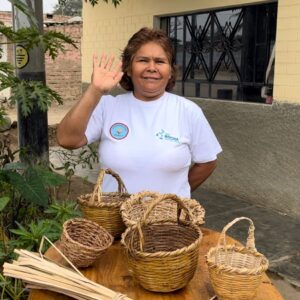
Milagros showing the baskets made by the Association of Artisans of the Cañoncillo Forest
Upon arrival, the excitement in the air was palpable. A Rocha team – Ciro and Andrea- welcomed me with smiles and open arms, graciously sharing stories of the beloved town of Pacasmayo and the challenges it faces. I have never experienced such an abundant amount of hospitality. Children, young adults and older individuals welcomed me to their homes and generously gifted me avocados, watermelons, tunas and other Peruvian fruits from their gardens! This was a very humbling experience. Today, as I reminisce about my time in Pacasmayo, I think about what one of the women said to me when visiting her house. She said, “Little girl, these fruits are from my garden, its free for me…I love when people visit me…if I could, I would give you more, but this is what the season has given me so far.”
Another highlight of my journey was visiting the beautiful dry forest. Ciro, Andrea and I woke up early in the morning, at around 4 am, to experience the mighty sunrise and capture the majesty of nature waking up. It is astonishing how some places have the power to stir introspection and awaken a dormant purpose within us. That day, among the silhouettes of ancient trees, the whispers of the wind and the chirping of thousands of birds, I felt a profound realization about the importance of volunteering our time to the world. The dry forest, with its gnarled trees and the occasional rustle of unseen creatures, painted a tale of endurance. It had survived the worst of climatic odds, and yet, its beauty was undeniable. But more than its aesthetic allure, it was a testament to the interwoven fabric of life that thrives despite adversity. However, as much as it was a space of resilience, it was also an ecosystem at the brink, vulnerable to human exploitation and negligence.
Ciro teaching volunteers how to plant Algarrobo seelings
As I continued my walk back, I went house-to-house talking about climate change. A Rocha Peru endeavoured this mission with the help of young volunteers from the University of Trujillo. The next day, we planted around 20 algarrobo trees that will not only to combat desertification but also to help restore the local ecosystem. Each hole dug and every seed planted, was symbolic of hope. Everyone took to the task with an endearing enthusiasm, including a 5-year-old princess who helped gently place each sapling into the earth.
As we shifted our focus to spread awareness the community about climate change, I was moved by their receptive nature. Using simple language and relatable examples, we discussed how a warming planet affects everything from their local farms to the health of their children. Many expressed genuine concern and wanted to know more about how they could make a difference.
As my journey in Pacasmayo came to a close, I was overcome with a profound sense of gratitude. The experience had been deeply transformative. I came to Pacasmayo as an outsider, hoping to bring about positive change. But by the end, the community had embraced me as one of their own, teaching me invaluable lessons about resilience, hope, and the unbreakable human spirit.
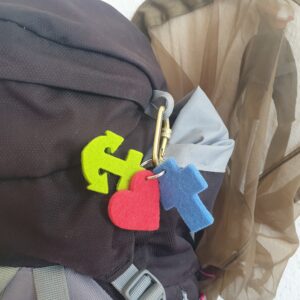
Cross, anchor and heart key ring, gifted to bring faith, hope, and love along the walk (a symbol of 1 Corinthians 13)
In a world overflowing with overwhelming news, now and again, a tale of hope, determination, and unity stands out. This is the incredible story of Coline Raillon, a beacon of light in the realm of conservation, who undertook an epic walk spanning three countries to raise awareness of the living crisis. Part of her mission was to raise funds for the global family of A Rocha since we are celebrating 40 years of A Rocha worldwide.
Coline’s walk covered over 1,200 kilometres through three countries, including Germany, Switzerland, and France. She carried no cash or credit card and was 100% reliant on the ask for hospitality in the form of food and accommodation. Coline shared A Rocha’s message of caring for creation with the people she met, offering nature walks as an optional contribution. Along her path, she met with strangers who soon became friends and enlightened many about the domino effect of a single environmental catastrophe.
Coline also aimed to raise money for A Rocha Peru, since Cyclone Yaku wreaked havoc on the northern coast of Peru at the beginning of the year, leaving countless communities bereft of necessities. Among the damages were the improved cookstoves installed in households as a part of La Libertad Dry Forest Project, and have become an essential daily tool for many families and an innovative move towards a sustainable future.
By the time Coline concluded her walk, she had sown seeds of environmental consciousness in countless hearts. Now, Coline plans to continue her theology studies and travel nomadically through France in a truck. She will continue to spread awareness of the living crisis by offering coffee and conversation with churches and their communities. A Rocha Peru wishes Coline all the best on her future endeavours and we thank her for all her efforts and the generosity of supporters, as many families will be able to have their cookstoves restored. To Coline, we owe a debt of gratitude.
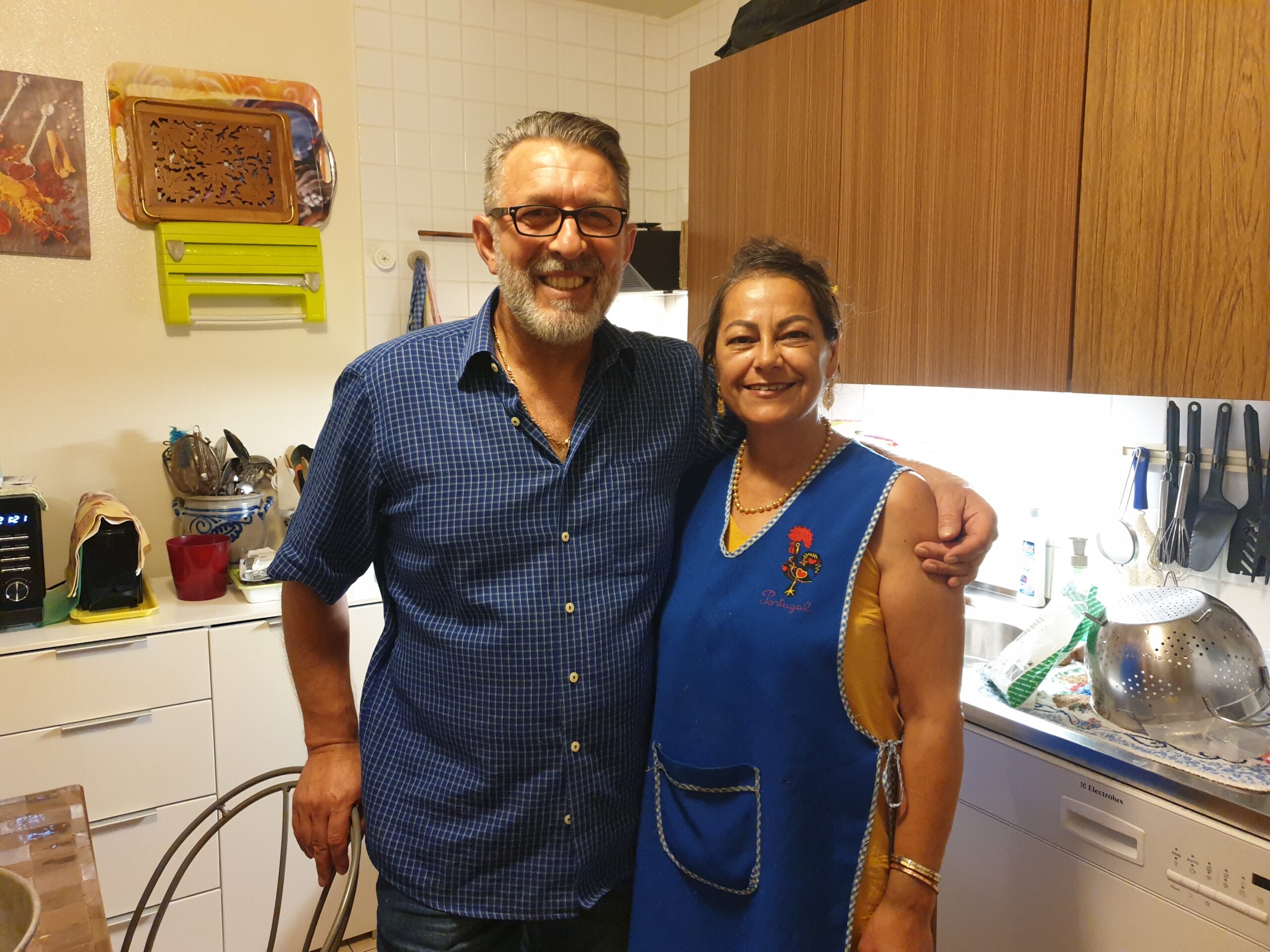
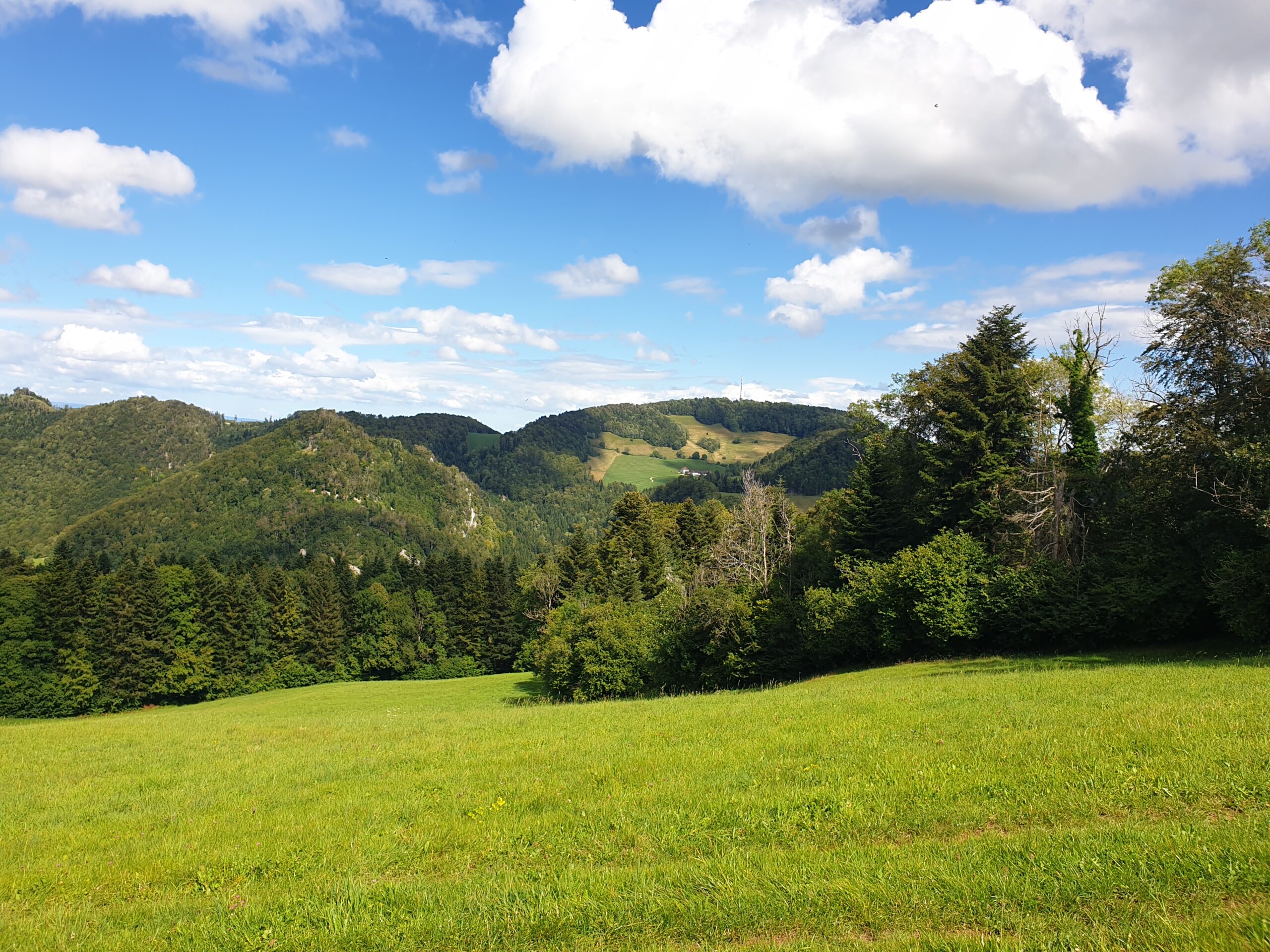
Hosts Ana-Bela & Duke, Lausanne.Visit to a beautiful farm in Switzerland
Nestled in the heart of the Peruvian jungle, Monte Carmelo stands out as a testament to the rich biodiversity of the region. Monte Carmelo, located in Cuzco, boasts a myriad of habitats – from high-altitude grasslands and cloud forests to low-lying valleys. Such ecological diversity provides a home for an astonishing variety of bird species, making the area a magnet for ornithologists and bird enthusiasts alike.
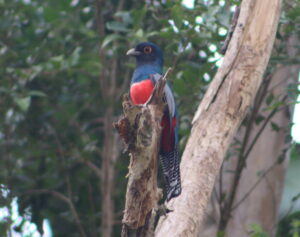
Blue-crowned Trogon (Trogon curucui)
The Amazon Natural & Cultural Heritage Conservation Project is working with the local community of Monte Carmelo to aid in the conservation of avian diversity and promote bird watching tourism. In an effort to understand the conservation status of the resident bird population, research was undertaken. A considerable amount of bird species was documented, through field surveys, acoustic monitoring and citizen science guided by our field expert Hugo Marcos Loyola.
Field surveys reveal that the Military Macaw, the White-winged Trumpeter and the Razor-billed inhabit the area. Military Macaw has been listed as Vulnerable on the IUCN’s Red List of Threatened Species. In addition, the White-winged Trumpeter and the Razor-billed are classified as Near Threatened. The new birdwatching group observed the Russet-backed Oropendola, Blue-crowned Trogon, and the Common Squirrel-cuckoo, amongst others. The biodiversity of the jungle is a treasure that we must value and protect. With initiatives like this one, we take another step towards the conservation and understanding of our natural environment.
At the end of 2021, A Rocha Peru started an initiative with Pastor José Guzmán from Iglesia Casa de Oración in Pacasmayo, northern Peru, to develop a community kitchen in San Demetrio. El comedor popular Micaela Bastidas was facing the challenge of improving its modest premises. In response, A Rocha Peru installed an improved cookstove for self-sufficiency, set up an organic garden and a space for rearing small animals, and introduced environmental education activities. The collaboration proved a significant catalyst that inspired the local government and companies to get involved and complement this work by developing the building structure, improving the kitchen, and providing a water cistern. Through these combined efforts, the Micaela Bastidas communitykitchen was transformed. It became a communal hub run by local women committed to preparing and serving daily nutritious meals to 28 families of 120 adults and children. This inspiring example of community work shows the multiplying impact that A Rocha Peru is having in the communities it serves.
The Iglesia Verde project moved to Lima this year and will be working in the outskirts of the Lima district. A Rocha Peru’s project is partnering with GZB and the Iglesia Betel de Lima (Betel church of Lima), a Presbyterian church led by Pastor Elmer Laura Quiñones. Grecia Valdivia is coordinating the activities as the new Project Officer. Aligned with the Creation Care Program, it aims to spread awareness and sensitize pastors, leaders, community, and church members on the importance of conservation and preservation of God’s Creation. The project will be working directly with approximately 80 beneficiaries. This includes church members, the Red de Jóvenes Presbyterians del Perú (Presbyterian Youth Network of Peru), and the Club de Madres Sarita Colonia (Sarita Colonia Mothers’ Club). The project will conduct in-person workshops on composting, home plant care, and recycling. For the youth network, the project will run a virtual course about the environmental challenges of our time, such as climate change, biodiversity loss, and environmental pollution. In addition, the course will teach the importance of ecosystem conservation and restoration and how we can work together to protect the environment and improve the quality of life in our communities.
An achievement from La Libertad Dry Forest Project this past year has been the installation of apiaries in Tronco Prieto Forest, where the honey bees forage on the flowering algarrobo trees. Bees play a crucial role in biodiversity conservation by pollinating wildflowers and help to conserve the dry forest. With a dedicated beekeeper, the project team explored the Tronco Prieto dry forest and met with Muchick Conservation Group to investigate the possibility of installing apiaries. Later in the year, the project held two sustainable training workshops for the local community on beekeeping. The new trainees will manage the apiaries installed in Tronco Prieto to produce honey. The beekeeping initiative is on track to beekeeping success, already making 12 litres of organic honey in January!
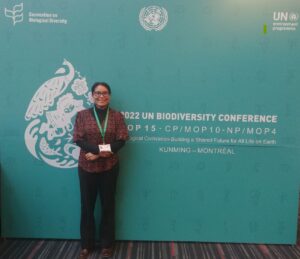
A Rocha was at the UN Biodiversity Conference (CBD COP15) in Montreal from 7-19 December 2022. Maria de los Angeles La Torre Cuadros represented A Rocha Peru as part of the A Rocha delegation to the conference. Maria de los Angeles is A Rocha Peru’s Board Chair and Director of Science and Conservation, and below is her reflection on attending the UN Biodiversity Conference.
“This meeting was a space to raise awareness of the situation of biological diversity, to see that the problems are a shared responsibility, to raise awareness of them … and investigate solutions among the various actors, to negotiate common actions, and to make progress in reducing the progressive loss of biodiversity. Commitments involve the whole of society from the financial sector, and business, to governments, ngos, and civil society. Reaching agreements of financing including the extent to which rich nations support developing countries to finance biodiversity conservation. The participation of indigenous people and local communities is especially important in decision making process relating to nature and the recognition of their land rights…I believe that commitments to reduction, for example, carbon emissions, pesticide use, land use change or the destructive industry itself should not only imply financial support to developing countries but also a responsibility of those who also finance them.
María de los Ángeles La Torre Cuadros at COP15 conference
I believe that a recognition of these responsibilities should be explicit and also more ambitious for their own countries. The political vision of the government of the day should not influence the agreements ….it is important not only to bring proposal but also to disseminate them in order to be visible and these four alliances that can put pressure on those who negotiate with governments. I believe that we need to listen more to those who are guardians of biodiversity, work more on raising awareness among those who finance and the various actors. If we want to bet on green infrastructure, sustainable production also implies investment in education and technology transfer for example reducing the gaps between countries in the north and south…., it was an important experience as an academic and as an actor seeking conservation to see how important it is to make visible the wellbeing done in conservation, the need for others to know about it, that you must make visible with multiple strategies what you are doing in such a way that it raises awareness of support of those who make decisions on the whole of government”.
La Libertad Dry Forest Project continues to supply improved cookstovesfor families in Pacasmayo. The improved cookstoves use less fuelwood than traditional open fires and reduce the need to cut down dry forest trees. The project delivered the kits to households in July and in August ten cookstoves were installed in households from San Demetrio and Pueblo Nuevo. A local mason installed the cookstoves.
This year the project also gave guinea pigs to beneficiary households to promote micro-livestock breeding. This new initiative hopes to address food security in rural areas. Guinea pigs are not only a source of animal protein but also their manure can fertilize agriculture fields and kitchen gardens. In traditional Peruvian households, the rearing environment for small animals is usually the kitchen, where the heat source protects guinea pigs from sudden temperature changes.
La Libertad Dry Forest Project continues to raise environmental awareness in schools and churches. This year it has expanded its education talks and garden activities to three schools and churches, including Calvary Chapel. The project inspires younger generations to become environmental ambassadors, helping them to reconnect with nature and enhancing conservation knowledge. Calvary Chapel, led by Pastor Renzo Plasencia Moscoso, is located in Pacasmayo. Since April, the project has conducted over 22 workshops and activities with adults and children of the Calvary Chapel congregation. Talks have included a variety of topics such as the state of the planet and its biodiversity, responsible consumption and sustainable development of the environment, solid waste, the importance of the dry forest, and ecological gardens. In July, the church started to create its garden called the El Buen Fruto [The Good Fruit]. Environmental leaders learned practical techniques such as home irrigation, composting, and planting vegetables. They prepared the soil, levelled and cleaned the terrain, and they have begun creating an interpretation centre.
Better Rice Production Workshop (C.Flores, July 2022)
Agroforestry is an approach that combines agriculture with trees on the same piece of land. Planting trees on farms can give farmers healthier soil and higher yields – not to mention creating vital homes for wildlife. La Libertad Dry Forest Project in Pacasmayo promotes agroforestry with local farmers by helping them combine fruit trees with existing crops. This approach aims to restore degraded agricultural land and reduce soil erosion. Over time, it also helps farmers to enhance crop production and generate alternate income from the sale of the fruit. In June, fruit tree species, such as apple, orange, mango, Japanese plum, and guaba, were produced in the local nursery in San Pedro de Lloc. In July, the project gave local farmers sixty agroforestry tree seedlings to plant on their land. The project will irrigate and monitor these trees over time. In addition to these agroforestry practices, the project has been helping farmers to improve crop production in other ways. In July, the La Libertad Dry Forest project held a workshop for rice producers in Santander. Rice is an important staple crop in the area. These workshops help to increase farmers’ knowledge of how to improve rice crop production and quality.
El Cañoncillo Natural Forest Private Conservation Area has three lagoons: Gallinazo, Larga and Cañoncillo. Creeping weeds and bushes have been obscuring the view of visitors to one of the lagoons, Gallinazo. As a result, La Libertad Dry Forest project conducted a harvesting campaign of the lagoon in May this year with the Agricultural Cooperative of Tecapa (CAU) and the Cañoncillo Forest Craftswomen Association. The harvesting campaign was to provide the artisan women’s group hand harvested natural resources to make their handicrafts but the right materials were not found. The project team acquired wool, and different local grasses such as viruli and reeds for the craftswomen to use. These resources helped motivate the craftswomen to meet and make their handicrafts. In addition, the women were trained to improve their products in Artisan workshops and explore new alternatives for their development. Selling non-timber products contributes to sustainable, forest-friendly livelihoods that help preserve the dry forest and sustain livelihoods.