Youth Who Inspire Change and Conservation

On the northern coast of Peru, the La Libertad Dry Forest in Pacasmayo harbors biodiversity that is as fragile as it is extraordinary. This ecosystem, full of life and contrasts, is also one of the most threatened in the country. Through the Dry Forest Project, A Rocha Peru works to restore and conserve it, promoting the participation of local communities to ensure its sustainability and return vitality to the forest. 

As part of this effort, the Youth Environmental Network was born, an initiative designed to engage communities and train the next generation to become future environmental leaders. Eleven university students from the National University of Trujillo and the Private University of the North responded to the call with enthusiasm, eager to learn and be part of the change. From the very beginning, their energy, curiosity, and dedication made a difference. 

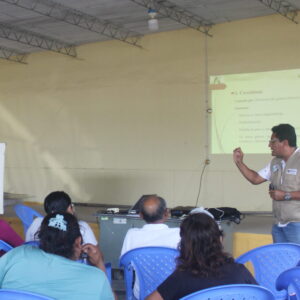
Over the past months, these young people have participated in a comprehensive training program that combines scientific knowledge with personal growth. Through seven training workshops, they have developed skills in environmental leadership, communication, forest inventory techniques, conservation, and ecological restoration. Each session has been an opportunity to learn, practice, and share knowledge, both in the classroom and in the field.

The most inspiring part has been watching their role evolve. At first, they arrived as participants, but over time they took on new challenges: assisting in organizing workshops, supporting our environmental promoter by guiding small groups, and even leading workshops on their own. Their confidence, commitment, and ability to convey the message of conservation have grown with each experience.

Today, seeing them act with ease, lead activities, speak passionately, and take responsibility fills us with pride. They represent what we value most in this project: the power of education and the hope that new generations bring. Their commitment to the forest and their communities is inspiring, reminding us that true change begins when someone dares to act.

At A Rocha Peru, we firmly believe that training environmental leaders also means shaping conscious, empathetic, and committed individuals. They are proof that the future of the Dry Forest is already taking root today in every young person who learns, teaches, and cares with love.

International Volunteering Opportunities with A Rocha Peru

From June to August, A Rocha Peru had the joy of hosting Valeria, an international volunteer who dedicated over two months of her time and energy to caring for creation in Pacasmayo. Working full-time, she became a key member of the Proyecto Bosque Seco team, bringing creativity, initiative, and a great desire to learn.

“My main responsibility was to support the team in Pacasmayo, which was in charge of the Proyecto Bosque Seco,” Valeria shares. “I helped plan and organize workshops on environmental topics such as microplastics and water conservation in Peru.” Her days were filled with activity: she painted signs for a school garden, organized a field trip to Bosque Cañoncillo, and designed educational games that helped children learn in a fun way.

Along with a group of women from the community, she participated in embroidery workshops and helped design a logo for the handmade bags they create. “The goal was to help them sell their products, even internationally,” she explains. Her creativity also reached the Proyecto Amazonía, where she led a painting workshop using natural materials, such as stones found in the area, to make the communal space more welcoming and full of life.

Beyond the skills she gained, what impacted Valeria the most was the experience of living and working closely with the local community. “The most rewarding part was seeing how consistency and genuine presence build trust and connection, where mutual support and solidarity are a natural part of daily life,” she reflects. “I realized that conservation is not only about protecting ecosystems but also understanding the needs and hopes of the people who live there.”

But Valeria was not the only volunteer who had a transformative experience. Noah, who came from Nashville, United States, was also part of the project, and his story of adventure and connection is equally inspiring.

Noah working with local kids (July, 2025)

Noah, who is the Conservation Coordinator at A Rocha USA, decided to do international volunteering in Peru to contribute to the Proyecto Amazonía and collaborate with the Machiguenga community in Monte Carmelo. During his time there, Noah focused his efforts primarily on maintaining the greenhouse in Monte Carmelo, where he collected seeds, cared for plants, and maintained the space to ensure the greenhouse continued to be a vital resource for the community.

Additionally, one of his main focuses was conducting interviews with members of the Machiguenga community. This resulted in two main products: a visual guide of the cultural knowledge the Machiguenga have regarding ecological indicators, such as signs to know the timing of fish egg-laying or when to plant or hunt, and written versions of the Machiguenga’s ancestral legends, both for adults and children. These versions were intended not only for the community’s use but also as reference material for A Rocha Peru.

One of the most meaningful aspects of his experience was the opportunity to document the Machiguenga’s ancestral legends, a project Noah described as a true honor. “I had the opportunity to listen to the stories, myths, and legends of the community, and being able to work on them has been incredibly valuable,” Noah shared. This work, besides being an enriching experience for him, has a profound and lasting impact on the community. The ability to preserve this knowledge without it being lost across generations is a true gift, both for the Machiguenga community and for A Rocha Peru.

Through volunteers like Valeria and Noah, A Rocha Peru continues to build bridges: between people and nature, between cultures, and between generations. These testimonies reflect how the adventure of international volunteering not only changes lives but also creates meaningful connections that endure beyond borders.

The Art that Conserves the Dry Forest

The La Libertad Dry Forest Project aims to restore and conserve one of the region’s most important ecosystems: the dry forest of Pacasmayo. Through this initiative, the project works to protect over 1,350 hectares of this valuable forest, which has been affected by human activity, while promoting sustainable practices with local communities.

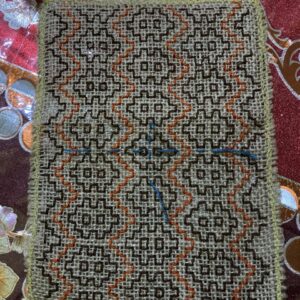
In this context, the project’s artisans have found a space where their art not only honors the flora and fauna of the dry forest but also incorporates traditional patterns from the local culture. Over several months, they have participated in workshops that have allowed them to blend their ancestral knowledge with new skills, creating pieces that reflect the natural and cultural richness of their environment.

Each crafted piece is a vibrant representation of the nature surrounding them, while also incorporating traditional patterns that tell stories of their community. The designs, inspired by both the biodiversity of the forest and the local cultural identity, serve as a reminder of the deep connection these women have with their land, history, and roots.

What’s most special about these workshops is that they have not only been a space for learning and creativity but also a place of tranquility and support for the women in the community. Here, they have found a space to share experiences, empower each other, and build a support network. Thus, the workshop becomes much more than a creative space—it is also a place for connection, growth, and empowerment.

Lady from the artisan club showing her creation (September, 2025)

Through their crafts, the women are not only generating sustainable income but also promoting the conservation of the dry forest. By incorporating natural and cultural elements into their creations, they are becoming guardians of their heritage, spreading their message of protection and respect for nature to new audiences.

The Bosque Seco Project demonstrates how art, nature, and community can come together to build a more sustainable future, where environmental preservation and the empowerment of people go hand in hand.

Sowing Awareness from the Classroom

The A Rocha Peru team with the students of the primary school (June, 2025)

During the month of June, more than 100 students from various educational institutions in Pacasmayo took part in educational workshops on the dry forest, designed to awaken their love and respect for the environment around them.

Through games, interactive activities, and practical examples, the children not only learned but also understood the importance of the algarrobo tree and local biodiversity, both essential to the health of their communities and the balance of the ecosystem. Recognizing the value of what grows close to home is also recognizing their identity and their role as caretakers of the land.

The most inspiring part was seeing their ideas bloom: many presented creative proposals to protect the dry forest, showing not only understanding, but deep commitment. With each workshop, the desire to keep sowing hope grows stronger. Because when education connects with the land, it also takes root in the heart.

Medicinal Plants Workshop in Monte Carmelo

The classroom transformed into a forest full of stories, aromas, and living memories. At the Igoriteshiari Primary School, in the Native Community of Monte Carmelo, a deeply enriching experience took place: educational workshops on medicinal plants, guided by a local elder—an ancestral keeper of the forest’s healing secrets.

Second Medicinal Plants Workshop at the Igoriteshiari Primary School (June, 2025)

Over the course of this trimester, two workshops have been held, benefiting more than 40 kids, from this school. In each session, students learned which plants help soothe stomach pain, which promote sleep, and which ones need to be protected because they’re becoming scarce. Every plant shared carried a story, a family memory, a lesson on how to care not only for the body but also for the environment.

More than just workshops, these were acts of cultural transmission. For many children, it was the first time they heard someone speak with such respect and depth about the medicine that comes from the forest—medicine that has healed generations before them. The elder didn’t just explain the properties of the plants; he taught them to see the forest with new eyes: not as a mere resource, but as an ally to be respected and protected.

Promoted by A Rocha Peru, these spaces aim to revalue traditional medicine as a vital part of local knowledge, to promote forest care, and to strengthen cultural pride in the living heritage of Amazonian communities.

Agroecology in Action

In December, A Rocha Perú conducted two practical agroecology workshops for 15 farmers from the communities of Santa María, Pueblo Nuevo, Tecapa, San Pedro de Lloc, and San Demetrio. These sessions took place in a small forest patch where the “Bosque Teresiano” Ecoclub actively works, serving as a key space for conservation and learning.

Biologist César Romero explaining agricultural fertilization techniques (December, 2024)

The workshops were led by biologist César Romero, a specialist in agroecology, and focused on the production of bocashi compost and bioferments, essential techniques for enhancing agricultural productivity in a sustainable way.  In addition to sharing technical knowledge, pre- and post-workshop surveys were conducted to assess the impact of learning among participants.

The results were encouraging: a significant increase in knowledge and the adoption of agroecological practices was observed. By providing farmers with tools for using organic fertilizers, we are not only promoting healthier and more resilient agriculture but also strengthening the commitment to dry forest conservation and soil regeneration.

Strengthening Conservation and Community Collaboration

In December, A Rocha Perú organized a special trip to Trujillo as a gesture of gratitude to community members who played a key role in conservation throughout the year, including artisans, volunteers, and local partners. The gathering not only strengthened relationships but also provided a valuable opportunity for exchanging experiences and learning in settings that underscored the importance of conservation and teamwork.

Guided explanation about the ruins of Chan Chan (December, 2024)

During the visit, participants explored the stunning Conache, a tourist destination nestled within a dry forest ecosystem. The experience highlighted the crucial role of community collaboration in protecting these landscapes and promoting sustainable tourism.

The group also visited the archaeological sites of Moche and Chan Chan—areas of significant historical and cultural importance, both surrounded by dry forest. These excursions encouraged reflection on the deep connection between natural and cultural heritage, as well as the shared responsibility to preserve them for future generations.

The trip stood as a testament to the power of community, demonstrating that collective efforts can make a meaningful impact on conservation and sustainable development. A Rocha Perú extended heartfelt thanks to all who took part in this enriching experience and for their ongoing commitment to protecting the environment.

Training for Better Breeding

Two successful workshops were held to train small farmers in improving livestock breeding practices in October, focusing on sheep and goat health and reproduction. The workshops took place in two communities: Jatanca and Tecapa. The first workshop in Jatanca saw a strong community turnout, reflecting the local farmers’ eagerness to learn. The second workshop, held in Tecapa, extended its reach to nearby towns, including Tecapa, Santonte, Santa María, and Pueblo Nuevo, engaging a wider audience.

Veterinarian Martín Zambrano in a livestock workshops (October, 2024)

The central theme of the workshops was “Health and Reproduction in Sheep and Goats,” a critical area of knowledge for farmers looking to enhance their livestock production. Veterinarian Martín Zambrano, an expert in the field, led the sessions, offering practical advice and technical insights to improve livestock management. He emphasized the importance of proper breeding techniques, disease prevention, and overall animal care.

These workshops did not just impart valuable technical information; they also sparked greater interest and commitment from the farmers to apply these practices in their herds. By equipping farmers with the knowledge to improve breeding practices, these workshops contribute to the long-term sustainability of livestock farming in the region, fostering healthier herds and more productive farming practices.

Transforming Spaces, Growing Minds

A Rocha Peru proudly participated in the inauguration of a new garden on October 9 at Elim Christian School, in the Mi Peru neighborhood of Ventanilla. This vibrant green space enhances the school’s surroundings while improving safety in the area, showcasing a commitment to environmental stewardship.

The inauguration event was a festive occasion that engaged students in various activities, including an environmental care trivia quiz. The highlight for many was the chance for younger children to plant their own seedlings in the newly created garden. This hands-on experience not only connected the children to nature but also instilled a sense of responsibility and ownership for their environment.
A Rocha Peru’s initiative represents a significant step toward fostering a culture of sustainability within the school community. It emphasizes the importance of nurturing both the earth and the hearts of the younger generation.

Reflecting on the day, Grazia Rabasa shared her heartfelt testimony: “This visit reminded me that each seed planted—both in the earth and in the hearts of these children—has the potential to grow and transform. Seeing their happy faces as they planted with their own hands was an unforgettable experience. They are the future, and every plant they nurture serves as a reminder of our responsibility to the environment.”

Grazia’s words encapsulate the essence of the event: the work done today impacts not only the soil but also the consciousness of the young ones who will carry forward a legacy of love and respect for creation. The garden stands as a symbol of hope, growth, and the vital connection between education and environmental care.

Handicraft Workshops Foster Sustainability

A Rocha Peru organized handicraft workshops for the local women’s artisan group in Pacasmayo.  The workshops focused on using renewable materials, promoting environmental awareness, and providing alternative sources of income. By linking traditional crafts to the health of the forest, these workshops encourage environmental stewardship and highlight the importance of sustainable resource management.

In August, the team organized two workshops for the Artisan Group. The first workshop introduced participants to the art of embroidering jute, a natural fiber, using designs inspired by the Moche culture.  The Moche culture is an ancient civilization from northern Peru renowned for its intricate art and iconography. Seven participants took part in this training, led by jute embroidery specialist. The session included an additional hands-on experience in Magdalena de Cao, located in the province of Ascope, to further enhance their skills.

Jute embroidery, August 2024


A second workshop focused on the recycling, reuse, and proper disposal of plastic bags. This session was led by an expert in plastic reuse, and was attended by 12 participants. The training emphasized practical ways to reduce plastic waste and creatively repurpose materials, reinforcing the community’s commitment to sustainability.  In September, a follow-up session took place in Magdalena de Cao.   Participants completed their jute embroidery projects featuring designs inspired by Moche culture. The craftswomen also visited a museum in Magdalena de Cao.  Here the women took part in an event that focused on crafts and culture. Afterwards, they received a guided tour of the museum’s exhibits, gaining further insight into the rich cultural heritage of the region.

These efforts are part of a broader initiative to create environmentally conscious community leaders who understand the value of conserving natural resources. By empowering the women of Pacasmayo with these skills, A Rocha Peru aims to foster greater economic resilience and promote the conservation of forest resources.


The Dry Forest Buzz

A Rocha Peru’s beekeeping initiatives continue to thrive and expand. Originally installed in the Tronco Prieto forest, the apiaries had to be relocated due to restrictions on beekeeping activities and the absence of permission from the community of San Pedro de Lloc, the forest’s owners. The beekeeping operations have since found a new home in the privately-owned Venturosa Dry Forest.  The relocation led to a mutually beneficial agreement between A Rocha Peru and the landowner. In a generous move, the landowner has decided to donate his share of the honey harvest to the local school, starting from the second harvest. The remaining income supports A Rocha Peru and dry forest conservation efforts, demonstrating a collaborative spirit that benefits both education and environmental conservation.  The presence of apiaries in the Venturosa Dry Forest brings significant advantages to the landowner’s farm and forest, particularly through essential pollination. Additionally, A Rocha Peru ensures meticulous care and maintenance of the forest. The landowner also uses these activities as educational opportunities for his students, who are active members of A Rocha Peru’s environmental club.                                                                    With the installation of apiaries in the dry forests, A Rocha Peru’s efforts are yielding high-quality honey now marketed under the official label, BoscoVivo, meaning “Living Forest.” This year, A Rocha Peru is set to advance its beekeeping initiatives with a renewed focus on community involvement and sustainability. One of the upcoming workshops will concentrate on installing new beehives, a key element already included in the workshop budget. This builds on previous workshops where several hives were successfully installed and are now being managed by A Rocha Peru.   In addition to new hive installations, we expect that this year’s workshops will cover a variety of beekeeping-related activities, such as propolis production, pollen collection, and other essential practices. These activities aim to enhance participants’ skills and knowledge, contributing to the project’s long-term self-sustainability and the broader institutional sustainability of A Rocha Peru.  A Rocha Peru is also launching pilot beekeeping activities to create greater involvement of local families committed to dry forest conservation. This project will provide one or two families with beehives, enabling them to benefit directly from honey production. The initiative includes ongoing monitoring and support from A Rocha Peru to ensure the hives’ success and the project’s sustainability.  By integrating beekeeping into the local community, A Rocha Peru aims to empower families, foster environmental stewardship, and promote sustainable livelihoods. This holistic approach supports conservation efforts and enhances the economic resilience of the involved communities.

Connecting youth to nature

By Grazia Rabasa

In our ongoing commitment to environmental conservation, A Rocha Peru is excited to share some of the progress of our latest initiative, the Amazon Natural and Cultural Heritage Conservation project.  Central to our project is the importance of preserving the Amazon rainforest and the rich cultural heritage of the Machigengan people.

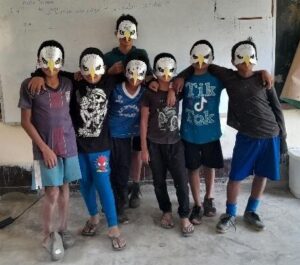
Eco-club Workshop creating bird masks, August 2023

One of our project objectives is to enhance environmental awareness among the younger generation about the conservation of the forest, flora, and fauna. In 2023, the pilot created an eco-club called Katsari Forest in the primary school in Monte Carmelo.  The eco-club has provided 66 enthusiastic students a platform to actively engage in environmental conservation efforts.  Through a series of workshops, including discovering the world of birds, getting to know the tropical forests and discussions on deforestation, we are empowering these young minds to become advocates for their environment.

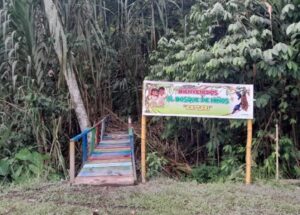
Bridge access to the Katsari children’s forest, August 2023

Moreover, our project extends beyond education to practical solutions like building a bridge to access the Bosques de los Niños (Children’s Forest).  This bridge not only facilitates the children’s exploration of the forest but also symbolizes our dedication to fostering a deep connection between communities and their natural surroundings.  By empowering communities, preserving cultural heritage, and safeguarding biodiversity, we are laying the groundwork for a sustainable future for both people and the planet.


Beyond Plastic Free February

A Rocha Peru, was inspired to participate in the #PlasticFreeFebruary campaign – an initiative to eliminate single-use plastics for the month of February.  Around the world, A Rocha groups joined this month-long challenge to reduce or eliminate the use of plastic, while cleaning up the plastic pollution that already exists.  A Rocha India led a successful clean-up drive where volunteers collected bags of dry plastic waste. Members from A Rocha France and A Rocha Canada joined the campaign by trying to cut out single-use plastics that were connected to their food consumption.  A Rocha Switzerland and Netherlands sent out weekly challenges and top tips. In Nigeria, Eden Creation Care Initiative held a month with a recycling project with school kids.

Throughout February, A Rocha Peru contributed to the campaign by sharing informative content, and offering practical tips to encourage individuals to reduce their plastic consumption. Now, as March fades into April, we stand at the dawn of a new season, ready to extend our commitment beyond the confines of a single month.

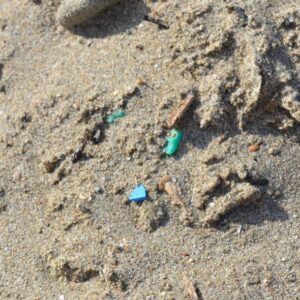
Fragments of microplastic (Image: A Rocha International 2018)

Plastic pollution stands as an ongoing environmental challenge, with microplastics posing threats to ecosystems and human well-being on a global scale. Microplastics are the material left behind when plastics decompose. As scientific studies continue to reveal the widespread presence of microplastics in our bodies, the urgency to address this issue becomes increasingly evident.

While #FreePlasticFebruary has formally concluded, our dedication to reducing plastic pollution remains unwavering. By fostering ongoing awareness and collective action, we aim to make a lasting impact in mitigating plastic pollution. As stewards of our planet, let us remain steadfast in our commitment to preserving the health of our environment and communities, ensuring a cleaner, healthier future for generations to come.

Be sure to check out our Plastics Toolbox for more information and resources.


A Heartfelt Visit to Pacasmayo

By Grazia Rabasa

Pacasmayo, a picturesque coastal town in northern Peru, is traditionally recognized for its beautiful beaches and warm-hearted inhabitants. However, during my recent visit to Pacasmayo, I not only admired its natural richness and scenic views but partook in a truly transformative experience. As a member of A Rocha Perú, my mission in Pacasmayo was to truly capture the essence and mission of A Rocha Peru through my camera while participating in the day-to-day activities of the Dry Forest Project with the local communities.

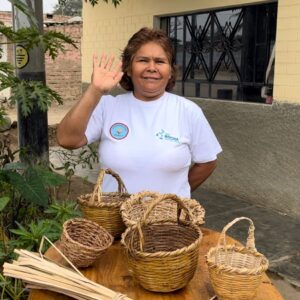
Milagros showing the baskets made by the Association of Artisans of the Cañoncillo Forest

Upon arrival, the excitement in the air was palpable. A Rocha team – Ciro and Andrea- welcomed me with smiles and open arms, graciously sharing stories of the beloved town of Pacasmayo and the challenges it faces.   I have never experienced such an abundant amount of hospitality. Children, young adults and older individuals welcomed me to their homes and generously gifted me avocados, watermelons, tunas and other Peruvian fruits from their gardens! This was a very humbling experience. Today, as I reminisce about my time in Pacasmayo, I think about what one of the women said to me when visiting her house.   She said, “Little girl, these fruits are from my garden, its free for me…I love when people visit me…if I could, I would give you more, but this is what the season has given me so far.”

Another highlight of my journey was visiting the beautiful dry forest. Ciro, Andrea and I woke up early in the morning, at around 4 am, to experience the mighty sunrise and capture the majesty of nature waking up. It is astonishing how some places have the power to stir introspection and awaken a dormant purpose within us. That day, among the silhouettes of ancient trees, the whispers of the wind and the chirping of thousands of birds, I felt a profound realization about the importance of volunteering our time to the world. The dry forest, with its gnarled trees and the occasional rustle of unseen creatures, painted a tale of endurance. It had survived the worst of climatic odds, and yet, its beauty was undeniable. But more than its aesthetic allure, it was a testament to the interwoven fabric of life that thrives despite adversity. However, as much as it was a space of resilience, it was also an ecosystem at the brink, vulnerable to human exploitation and negligence.

Ciro teaching volunteers how to plant Algarrobo seelings

As I continued my walk back, I went house-to-house talking about climate change. A Rocha Peru endeavoured this mission with the help of young volunteers from the University of Trujillo. The next day, we planted around 20 algarrobo trees that will not only to combat desertification but also to help restore the local ecosystem. Each hole dug and every seed planted, was symbolic of hope.  Everyone took to the task with an endearing enthusiasm, including a 5-year-old princess who helped gently place each sapling into the earth.

As we shifted our focus to spread awareness the community about climate change, I was moved by their receptive nature. Using simple language and relatable examples, we discussed how a warming planet affects everything from their local farms to the health of their children. Many expressed genuine concern and wanted to know more about how they could make a difference.

As my journey in Pacasmayo came to a close, I was overcome with a profound sense of gratitude. The experience had been deeply transformative. I came to Pacasmayo as an outsider, hoping to bring about positive change. But by the end, the community had embraced me as one of their own, teaching me invaluable lessons about resilience, hope, and the unbreakable human spirit.

A New Pilot Project in the Peruvian Amazon

Bird Watching, Monte Carmelo (H.Marcos, July 2023)

The Amazon Natural and Cultural Heritage Pilot Project began in June this year. The pilot project works in a small community called Monte Carmelo, located in the basin of the Urubamba River in the Southeastern Peruvian Amazon. A Rocha Peru partners with the Comunidad Nativa Machiguenga Monte Carmelo (Monte Carmelo Machiguenga Indigenous Community) to help conserve and restore ecosystems and endangered species and preserve the cultural traditions and ancestral knowledge in native communities. The project is currently researching birds and medicinal plant species in this area.

To preserve traditions, workshops and talks will be conducted by elders to spread knowledge to the younger generation on the uses of traditional medicinal plants, the Machiguenga language, and other ancestral customs like hunting with bow and arrow.

For the local school, the project is establishing a recreational forest park to create an opportunity to teach children and others about the environment and the importance of preserving natural ecosystems.  Stay tuned for more developments in the coming months!

Educating Schools about the Dry Forest

This year, La Libertad Dry Forest Project aims to focus its environmental education on the youth of the Pacasmayo community to help generate environmental leaders and empower them to conserve the dry forest. Many activities have kicked off, including talks about the importance of the dry forest at the National University of Trujillo, Guadalupe, the Tecapa Secondary School, and San Demetrio.  The team has created an environmental club called Semillas Teresianas (Teresian Seeds) with the 2nd and 3rd-grade secondary students at the Santa Teresa Inmaculada school in San Pedro de Lloc.   The eco-club members visited the Venturosa dry forest and collected photos and information to help develop the eco-club’s vision.Moreover, the team conducted talks to raise awareness about the importance of the dry forest at Santa Teresa Inmaculada, where 300 students participated. To contribute to the conservation of the dry forests, the Santa Teresa Inmaculada School will help plant 100 Algarrobo tree seedlings. The ideal area for planting was identified in Cañoncillo with the help of Cooperativa Agraria de Usuarios de Tecapa.

The transformation of a community kitchen

At the end of 2021, A Rocha Peru started an initiative with Pastor José Guzmán from Iglesia Casa de Oración in Pacasmayo, northern Peru, to develop a community kitchen in San Demetrio. El comedor popular Micaela Bastidas was facing the challenge of improving its modest premises. In response, A Rocha Peru installed an improved cookstove for self-sufficiency, set up an organic garden and a space for rearing small animals, and introduced environmental education activities.  The collaboration proved a significant catalyst that inspired the local government and companies to get involved and complement this work by developing the building structure, improving the kitchen, and providing a water cistern.  Through these combined efforts, the Micaela Bastidas community kitchen was transformed. It became a communal hub run by local women committed to preparing and serving daily nutritious meals to 28 families of 120 adults and children. This inspiring example of community work shows the multiplying impact that A Rocha Peru is having in the communities it serves.

Iglesia Verde project moves to Lima!

The Iglesia Verde project moved to Lima this year and will be working in the outskirts of the Lima district.  A Rocha Peru’s project is partnering with GZB and the Iglesia Betel de Lima (Betel church of Lima), a Presbyterian church led by Pastor Elmer Laura Quiñones.  Grecia Valdivia is coordinating the activities as the new Project Officer.  Aligned with the Creation Care Program, it aims to spread awareness and sensitize pastors, leaders, community, and church members on the importance of conservation and preservation of God’s Creation.  The project will be working directly with approximately 80 beneficiaries.  This includes church members, the Red de Jóvenes Presbyterians del Perú (Presbyterian Youth Network of Peru), and the Club de Madres Sarita Colonia (Sarita Colonia Mothers’ Club).  The project will conduct in-person workshops on composting, home plant care, and recycling. For the youth network, the project will run a virtual course about the environmental challenges of our time, such as climate change, biodiversity loss, and environmental pollution. In addition, the course will teach the importance of ecosystem conservation and restoration and how we can work together to protect the environment and improve the quality of life in our communities.

Buzzing our way towards sustainability

An achievement from La Libertad Dry Forest Project this past year has been the installation of apiaries in Tronco Prieto Forest, where the honey bees forage on the flowering algarrobo trees. Bees play a crucial role in biodiversity conservation by pollinating wildflowers and help to conserve the dry forest. With a dedicated beekeeper, the project team explored the Tronco Prieto dry forest and met with Muchick Conservation Group to investigate the possibility of installing apiaries.  Later in the year, the project held two sustainable training workshops for the local community on beekeeping. The new trainees will manage the apiaries installed in Tronco Prieto to produce honey. The beekeeping initiative is on track to beekeeping success, already making 12 litres of organic honey in January!

Sowing seeds for change

La Libertad Dry Forest Project continues to raise environmental awareness in schools and churches. This year it has expanded its education talks and garden activities to three schools and churches, including Calvary Chapel. The project inspires younger generations to become environmental ambassadors, helping them to reconnect with nature and enhancing conservation knowledge.  Calvary Chapel, led by Pastor Renzo Plasencia Moscoso, is located in Pacasmayo.  Since April, the project has conducted over 22 workshops and activities with adults and children of the Calvary Chapel congregation. Talks have included a variety of topics such as the state of the planet and its biodiversity, responsible consumption and sustainable development of the environment, solid waste, the importance of the dry forest, and ecological gardens.  In July, the church started to create its garden called the El Buen Fruto [The Good Fruit]. Environmental leaders learned practical techniques such as home irrigation, composting, and planting vegetables. They prepared the soil, levelled and cleaned the terrain, and they have begun creating an interpretation centre.