Youth Who Inspire Change and Conservation

On the northern coast of Peru, the La Libertad Dry Forest in Pacasmayo harbors biodiversity that is as fragile as it is extraordinary. This ecosystem, full of life and contrasts, is also one of the most threatened in the country. Through the Dry Forest Project, A Rocha Peru works to restore and conserve it, promoting the participation of local communities to ensure its sustainability and return vitality to the forest. 

As part of this effort, the Youth Environmental Network was born, an initiative designed to engage communities and train the next generation to become future environmental leaders. Eleven university students from the National University of Trujillo and the Private University of the North responded to the call with enthusiasm, eager to learn and be part of the change. From the very beginning, their energy, curiosity, and dedication made a difference. 

Over the past months, these young people have participated in a comprehensive training program that combines scientific knowledge with personal growth. Through seven training workshops, they have developed skills in environmental leadership, communication, forest inventory techniques, conservation, and ecological restoration. Each session has been an opportunity to learn, practice, and share knowledge, both in the classroom and in the field.

The most inspiring part has been watching their role evolve. At first, they arrived as participants, but over time they took on new challenges: assisting in organizing workshops, supporting our environmental promoter by guiding small groups, and even leading workshops on their own. Their confidence, commitment, and ability to convey the message of conservation have grown with each experience.

Today, seeing them act with ease, lead activities, speak passionately, and take responsibility fills us with pride. They represent what we value most in this project: the power of education and the hope that new generations bring. Their commitment to the forest and their communities is inspiring, reminding us that true change begins when someone dares to act.

At A Rocha Peru, we firmly believe that training environmental leaders also means shaping conscious, empathetic, and committed individuals. They are proof that the future of the Dry Forest is already taking root today in every young person who learns, teaches, and cares with love.

International Volunteering Opportunities with A Rocha Peru

From June to August, A Rocha Peru had the joy of hosting Valeria, an international volunteer who dedicated over two months of her time and energy to caring for creation in Pacasmayo. Working full-time, she became a key member of the Proyecto Bosque Seco team, bringing creativity, initiative, and a great desire to learn.

“My main responsibility was to support the team in Pacasmayo, which was in charge of the Proyecto Bosque Seco,” Valeria shares. “I helped plan and organize workshops on environmental topics such as microplastics and water conservation in Peru.” Her days were filled with activity: she painted signs for a school garden, organized a field trip to Bosque Cañoncillo, and designed educational games that helped children learn in a fun way.

Along with a group of women from the community, she participated in embroidery workshops and helped design a logo for the handmade bags they create. “The goal was to help them sell their products, even internationally,” she explains. Her creativity also reached the Proyecto Amazonía, where she led a painting workshop using natural materials, such as stones found in the area, to make the communal space more welcoming and full of life.

Beyond the skills she gained, what impacted Valeria the most was the experience of living and working closely with the local community. “The most rewarding part was seeing how consistency and genuine presence build trust and connection, where mutual support and solidarity are a natural part of daily life,” she reflects. “I realized that conservation is not only about protecting ecosystems but also understanding the needs and hopes of the people who live there.”

But Valeria was not the only volunteer who had a transformative experience. Noah, who came from Nashville, United States, was also part of the project, and his story of adventure and connection is equally inspiring.

Noah working with local kids (July, 2025)

Noah, who is the Conservation Coordinator at A Rocha USA, decided to do international volunteering in Peru to contribute to the Proyecto Amazonía and collaborate with the Machiguenga community in Monte Carmelo. During his time there, Noah focused his efforts primarily on maintaining the greenhouse in Monte Carmelo, where he collected seeds, cared for plants, and maintained the space to ensure the greenhouse continued to be a vital resource for the community.

Additionally, one of his main focuses was conducting interviews with members of the Machiguenga community. This resulted in two main products: a visual guide of the cultural knowledge the Machiguenga have regarding ecological indicators, such as signs to know the timing of fish egg-laying or when to plant or hunt, and written versions of the Machiguenga’s ancestral legends, both for adults and children. These versions were intended not only for the community’s use but also as reference material for A Rocha Peru.

One of the most meaningful aspects of his experience was the opportunity to document the Machiguenga’s ancestral legends, a project Noah described as a true honor. “I had the opportunity to listen to the stories, myths, and legends of the community, and being able to work on them has been incredibly valuable,” Noah shared. This work, besides being an enriching experience for him, has a profound and lasting impact on the community. The ability to preserve this knowledge without it being lost across generations is a true gift, both for the Machiguenga community and for A Rocha Peru.

Through volunteers like Valeria and Noah, A Rocha Peru continues to build bridges: between people and nature, between cultures, and between generations. These testimonies reflect how the adventure of international volunteering not only changes lives but also creates meaningful connections that endure beyond borders.

The Art that Conserves the Dry Forest

The La Libertad Dry Forest Project aims to restore and conserve one of the region’s most important ecosystems: the dry forest of Pacasmayo. Through this initiative, the project works to protect over 1,350 hectares of this valuable forest, which has been affected by human activity, while promoting sustainable practices with local communities.

In this context, the project’s artisans have found a space where their art not only honors the flora and fauna of the dry forest but also incorporates traditional patterns from the local culture. Over several months, they have participated in workshops that have allowed them to blend their ancestral knowledge with new skills, creating pieces that reflect the natural and cultural richness of their environment.

Each crafted piece is a vibrant representation of the nature surrounding them, while also incorporating traditional patterns that tell stories of their community. The designs, inspired by both the biodiversity of the forest and the local cultural identity, serve as a reminder of the deep connection these women have with their land, history, and roots.

What’s most special about these workshops is that they have not only been a space for learning and creativity but also a place of tranquility and support for the women in the community. Here, they have found a space to share experiences, empower each other, and build a support network. Thus, the workshop becomes much more than a creative space—it is also a place for connection, growth, and empowerment.

Lady from the artisan club showing her creation (September, 2025)

Through their crafts, the women are not only generating sustainable income but also promoting the conservation of the dry forest. By incorporating natural and cultural elements into their creations, they are becoming guardians of their heritage, spreading their message of protection and respect for nature to new audiences.

The Bosque Seco Project demonstrates how art, nature, and community can come together to build a more sustainable future, where environmental preservation and the empowerment of people go hand in hand.

The Machiguenga Botanic Garden as a Bridge Between Tradition and Nature

In the Native Community of Monte Carmelo, a new space of life and learning has taken root. After six months of work, the Machiguenga Botanic Garden has been completed: a place where ancestral wisdom and environmental conservation come together in harmony.

This initiative began in April, when the community of Monte Carmelo formally granted one hectare of land for the creation of a community botanical garden. From that moment, A Rocha Peru, together with local residents and the respected elder Máximo Kategari, began a journey of restoration and collaboration. The work included clearing and conditioning trails, identifying native species, collecting medicinal plants, and installing interpretive signs that tell the stories and uses of each one.

Throughout the process, the garden became more than just a conservation space: it became a meeting point for generations. The participation of the Local School of Monte Carmelo and several community volunteers strengthened the connection between traditional knowledge and modern science. For the youth, it is an open-air classroom; for the elders, it is a living testimony of their cultural heritage.

Now completed, the Machiguenga Botanic Garden will continue to grow as a space for education, research, and community reflection. Its goal is to identify and document 100% of the species present, ensuring that each one becomes a tool for learning and conservation.

Beyond its ecological importance, the garden symbolizes unity and continuity. It preserves the medicinal plants that have healed generations and invites new ones to care for the forest with the same reverence. Through this effort, Monte Carmelo shows that protecting nature is also a way of protecting memory, and that in every leaf and root, life and wisdom flourish together.

Sowing Awareness from the Classroom

The A Rocha Peru team with the students of the primary school (June, 2025)

During the month of June, more than 100 students from various educational institutions in Pacasmayo took part in educational workshops on the dry forest, designed to awaken their love and respect for the environment around them.

Through games, interactive activities, and practical examples, the children not only learned but also understood the importance of the algarrobo tree and local biodiversity, both essential to the health of their communities and the balance of the ecosystem. Recognizing the value of what grows close to home is also recognizing their identity and their role as caretakers of the land.

The most inspiring part was seeing their ideas bloom: many presented creative proposals to protect the dry forest, showing not only understanding, but deep commitment. With each workshop, the desire to keep sowing hope grows stronger. Because when education connects with the land, it also takes root in the heart.

Medicinal Plants Workshop in Monte Carmelo

The classroom transformed into a forest full of stories, aromas, and living memories. At the Igoriteshiari Primary School, in the Native Community of Monte Carmelo, a deeply enriching experience took place: educational workshops on medicinal plants, guided by a local elder—an ancestral keeper of the forest’s healing secrets.

Second Medicinal Plants Workshop at the Igoriteshiari Primary School (June, 2025)

Over the course of this trimester, two workshops have been held, benefiting more than 40 kids, from this school. In each session, students learned which plants help soothe stomach pain, which promote sleep, and which ones need to be protected because they’re becoming scarce. Every plant shared carried a story, a family memory, a lesson on how to care not only for the body but also for the environment.

More than just workshops, these were acts of cultural transmission. For many children, it was the first time they heard someone speak with such respect and depth about the medicine that comes from the forest—medicine that has healed generations before them. The elder didn’t just explain the properties of the plants; he taught them to see the forest with new eyes: not as a mere resource, but as an ally to be respected and protected.

Promoted by A Rocha Peru, these spaces aim to revalue traditional medicine as a vital part of local knowledge, to promote forest care, and to strengthen cultural pride in the living heritage of Amazonian communities.

How green does your church’s heart beat?

From A Rocha Peru’s Green Church Project, we continue to sow ecological awareness within faith communities. As part of this commitment, we are excited to present a new quiz “How Green Is Your Church?” — a simple yet powerful resource designed to help churches reflect on how they are living out their call to care for God’s creation.

This questionnaire is born from a deep conviction: that to worship the Creator is also to care for what He lovingly made. “God has given us the responsibility to care for creation (Genesis 2:15),” says Hannah, coordinator of the Green Church Project. “But how can you know where to go if you don’t know where you are?” she adds, pointing to the importance of having a starting point for evaluation and growth.

The quiz is short and practical, with yes-or-no questions grouped into four essential areas of church life:

  • Worship of the Creator
  • Teaching
  • Community Life
  • Relationship with Nature
Hannah Wilkinson, Green Church Coordinator (July, 2025)

Beyond measuring, the goal is to inspire. “The idea is not for people to feel judged, but encouraged. That they can see what they’re already doing well, and choose one area to improve or change,” Hannah explains. Because even the smallest steps can make a difference on the journey toward a greener church.

Though it’s primarily aimed at leaders, the quiz is open to the whole community. “Caring for God’s creation is the responsibility of the whole church, not just our leaders,” Hannah affirms with conviction.

Those who complete the quiz can opt to receive free materials, including a guide for incorporating creation care into worship, an introduction to the theology of environmental stewardship, and personalized support tailored to the church’s needs. “The church decides how much or how little contact they want to have with us,” Hannah emphasizes, promoting a respectful and flexible relationship.

Although this quiz was just recently launched, we have already witnessed the deep impact that creation care initiatives can have when sown with intention. Last year, through the Kawsay mini-project in Ayacucho, we saw the rise of a vibrant and committed movement of creation stewards. Today, that same spirit continues: members of Cristo Rey Church in Huanta, who were part of that experience, have chosen to replicate the project internally this year. It’s proof that a well-planted seed can bear lasting fruit — transforming not just practices, but hearts.

The dream is clear: to build a nationwide network of green churches — connected, committed, and ready to walk together in this ecological journey. “When things feel overwhelming, we need to support each other. We walk together, for the glory of God,” concludes Hannah.

Want to join this network? Take the quiz “How Green Is Your Church?”

Meet the New Guardians of the Dry Forest

In La Libertad, in northern Peru, one of the country’s most threatened and least understood ecosystems survives: the dry forest. Though it may seem barren at first glance, this landscape holds immense natural and cultural wealth. Among emblematic trees like algarrobo, faique, and sapote, unique species—many of them endangered—depend on this environment to survive. However, the forest faces a constant threat: illegal logging, unsustainable firewood extraction, wildfires, and the progressive loss of vegetation cover have put its ecological balance at risk. This degradation not only harms biodiversity but also impacts the local communities who rely on the forest for water, shade, food, medicine, and a deep sense of identity.

Virgilio and Víctor, the new guardians of the dry forest (May, 2025)

In response to this reality, A Rocha Peru has taken action with a deeply community-based vision. Since April, we have formalized the creation of a Local Park Rangers team, an initiative that seeks to generate solutions from within the territory, led by those who know and love it.

Through targeted training, patrol protocols, and technical support, this team—currently led by Virgilio and Víctor—conducts regular patrols through the forest. Between May and June alone, they carried out over 35 patrols. Their presence helps prevent logging, detect threats, and raise awareness among other members of the community.

But beyond surveillance, what’s being cultivated is a renewed sense of belonging and collective responsibility. As they walk through the forest, these rangers aren’t just protecting trees—they are safeguarding the memory of an ecosystem that has endured droughts, neglect, and abandonment.

At a time when ecosystems are disappearing in silence, initiatives like this speak out. Because when the care of creation starts from within, with empowered local actors, conservation is not only possible—it is sustainable and transformative.

Sensory Garden for Harmony and Well-being

On March 11, A Rocha Perú, Monterrico Christian School (MCS), and the Christian organization Cristo para la Ciudad signed a cooperation agreement to develop a mini environmental conservation and social responsibility project for the year 2025. This initiative, part of the Green Church program, will be supported by our new coordinator, Hannah Wilkinson, and will involve MCS high school students as part of their educational curriculum.

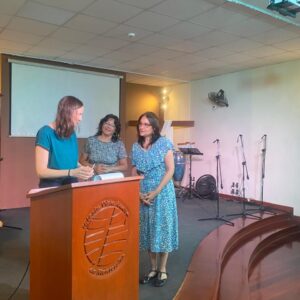
Hannah signing the agreement with the MCS (March 11, 2025)

The aim of this project is to co-design and implement a Sensory Garden, depending on feasibility and the students’ final design decisions for Vidas que Valen, a ministry located in Villa El Salvador and led by Pastor Walter Matos of Iglesia Bautista El Fundamento. This ministry provides support for families with children with disabilities, offering companionship and assistance in their daily lives. The initiative was inspired by the pastor’s own experience with his son, who had a disability, and his desire to create a space of well-being and recreation for families facing similar challenges.

Through this agreement, A Rocha Perú will provide technical guidance, conduct environmental strategy workshops, and offer ongoing support throughout the process. As part of MCS’s educational commitment, students will not only design the garden but also actively participate in its potential construction, aiming to create a space of peace and restoration for the families of Vidas que Valen. The garden’s inauguration is tentatively scheduled for September 2025, depending on the project’s development.

This collaboration brings together faith, education, and environmental stewardship, serving as a living testimony to the transformative power of working together. We joyfully celebrate the beginning of this journey to bring God’s creation closer to those who need it most!

Agroecology in Action

In December, A Rocha Perú conducted two practical agroecology workshops for 15 farmers from the communities of Santa María, Pueblo Nuevo, Tecapa, San Pedro de Lloc, and San Demetrio. These sessions took place in a small forest patch where the “Bosque Teresiano” Ecoclub actively works, serving as a key space for conservation and learning.

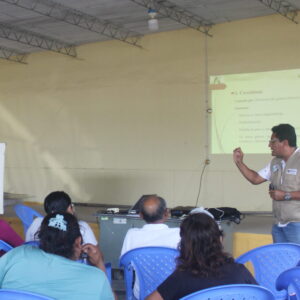
Biologist César Romero explaining agricultural fertilization techniques (December, 2024)

The workshops were led by biologist César Romero, a specialist in agroecology, and focused on the production of bocashi compost and bioferments, essential techniques for enhancing agricultural productivity in a sustainable way.  In addition to sharing technical knowledge, pre- and post-workshop surveys were conducted to assess the impact of learning among participants.

The results were encouraging: a significant increase in knowledge and the adoption of agroecological practices was observed. By providing farmers with tools for using organic fertilizers, we are not only promoting healthier and more resilient agriculture but also strengthening the commitment to dry forest conservation and soil regeneration.

Strengthening Conservation and Community Collaboration

In December, A Rocha Perú organized a special trip to Trujillo as a gesture of gratitude to community members who played a key role in conservation throughout the year, including artisans, volunteers, and local partners. The gathering not only strengthened relationships but also provided a valuable opportunity for exchanging experiences and learning in settings that underscored the importance of conservation and teamwork.

Guided explanation about the ruins of Chan Chan (December, 2024)

During the visit, participants explored the stunning Conache, a tourist destination nestled within a dry forest ecosystem. The experience highlighted the crucial role of community collaboration in protecting these landscapes and promoting sustainable tourism.

The group also visited the archaeological sites of Moche and Chan Chan—areas of significant historical and cultural importance, both surrounded by dry forest. These excursions encouraged reflection on the deep connection between natural and cultural heritage, as well as the shared responsibility to preserve them for future generations.

The trip stood as a testament to the power of community, demonstrating that collective efforts can make a meaningful impact on conservation and sustainable development. A Rocha Perú extended heartfelt thanks to all who took part in this enriching experience and for their ongoing commitment to protecting the environment.

New Algarrobo Trees for a Thriving Future

In the sun-scorched landscapes of La Libertad, where dry forests face the mounting pressures of climate change and deforestation, a quiet yet powerful story of hope is taking root—one tree at a time.

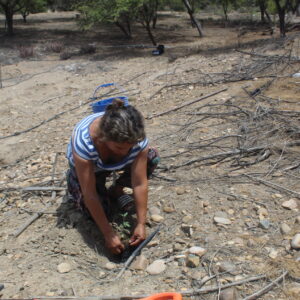
Planting Algarrobos in Pacasmayo  (February, 2025)

Between January and March 2025, our seed nursery has played a vital role in cultivating native species like algarrobo, as well as nourishing edible plants such as chili peppers (ají escabeche and limo ), papayas, lemon, orange, ice-cream bean plants (pacay) and spinach. Each plant is grown with purpose—some to restore fragile ecosystems, others to feed and support local families. This season alone, over 100 algarrobo seedlings raised in the nursery have been successfully planted across Pacasmayo and Pacanguilla, bringing life and resilience back to the land.

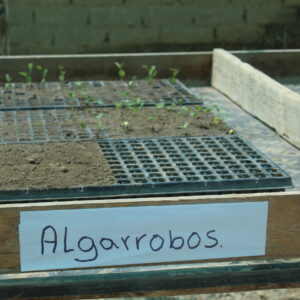
Algarrobo seeds germinating in the nursery (February, 2025)

Our commitment goes beyond reforestation—it also lives in our relationships with the communities around us. This season, we donated 22 chili pepper plants to the families of San Demetrio, and gifted flowers to the women who bring warmth and care to the Micaela Bastidas community kitchen. These gestures, though simple, help enrich local biodiversity and strengthen the bonds between the nursery and the people who live near it.

Every seed sown, every tree planted, and every plant shared is a reminder of what’s possible when we combine patience, dedication, and collective action. Together, we’re nurturing not just forests—but a future rooted in hope.


Training for Better Breeding

Two successful workshops were held to train small farmers in improving livestock breeding practices in October, focusing on sheep and goat health and reproduction. The workshops took place in two communities: Jatanca and Tecapa. The first workshop in Jatanca saw a strong community turnout, reflecting the local farmers’ eagerness to learn. The second workshop, held in Tecapa, extended its reach to nearby towns, including Tecapa, Santonte, Santa María, and Pueblo Nuevo, engaging a wider audience.

Veterinarian Martín Zambrano in a livestock workshops (October, 2024)

The central theme of the workshops was “Health and Reproduction in Sheep and Goats,” a critical area of knowledge for farmers looking to enhance their livestock production. Veterinarian Martín Zambrano, an expert in the field, led the sessions, offering practical advice and technical insights to improve livestock management. He emphasized the importance of proper breeding techniques, disease prevention, and overall animal care.

These workshops did not just impart valuable technical information; they also sparked greater interest and commitment from the farmers to apply these practices in their herds. By equipping farmers with the knowledge to improve breeding practices, these workshops contribute to the long-term sustainability of livestock farming in the region, fostering healthier herds and more productive farming practices.

A Rocha Peru at COP16

The 16th Conference of the Parties (COP16) to the Convention on Biological Diversity (CBD) took place in October 2024 in Cali, Colombia. This event marked a pivotal moment in global efforts to protect biodiversity, as ecosystems are collapsing and species are disappearing at an alarming rate.  A Rocha actively participated in COP16, bringing a unique Christian perspective to the global conservation conversation. Representatives from A Rocha International, A Rocha Ghana, A Rocha India, and A Rocha Peru were present to influence policy, build partnerships, and advocate for the protection of creation.

One highlight of A Rocha’s involvement was the event titled “Green Muscle Memory: Addressing Global Challenges.” This session shared inspiring stories of transformative environmental education from A Rocha’s global projects and demonstrated how experiential learning fosters long-term environmental stewardship in communities around the world. The recording can be viewed here, starting at 6:47:00.

A Rocha Peru also contributed to COP16 by participating in the inauguration of the Peru Pavilion. Sarah French, ARI’s Director of Environmental Education and Conservation Policy,  along with Maria Los Angeles La Torre Cuadros,  A Rocha Peru’s Chair of the Board of Directors, highlighted the organization’s ongoing efforts in environmental education and conservation.

A Rocha’s Christian perspective was essential, reminding everyone of our moral responsibility to care for God’s creation. As COP16 progressed, we remained hopeful for meaningful agreements that would protect biodiversity for future generations, and we continue to pray for effective solutions for environmental conservation.

Transforming Spaces, Growing Minds

A Rocha Peru proudly participated in the inauguration of a new garden on October 9 at Elim Christian School, in the Mi Peru neighborhood of Ventanilla. This vibrant green space enhances the school’s surroundings while improving safety in the area, showcasing a commitment to environmental stewardship.

The inauguration event was a festive occasion that engaged students in various activities, including an environmental care trivia quiz. The highlight for many was the chance for younger children to plant their own seedlings in the newly created garden. This hands-on experience not only connected the children to nature but also instilled a sense of responsibility and ownership for their environment.
A Rocha Peru’s initiative represents a significant step toward fostering a culture of sustainability within the school community. It emphasizes the importance of nurturing both the earth and the hearts of the younger generation.

Reflecting on the day, Grazia Rabasa shared her heartfelt testimony: “This visit reminded me that each seed planted—both in the earth and in the hearts of these children—has the potential to grow and transform. Seeing their happy faces as they planted with their own hands was an unforgettable experience. They are the future, and every plant they nurture serves as a reminder of our responsibility to the environment.”

Grazia’s words encapsulate the essence of the event: the work done today impacts not only the soil but also the consciousness of the young ones who will carry forward a legacy of love and respect for creation. The garden stands as a symbol of hope, growth, and the vital connection between education and environmental care.

Through the Lens

A Rocha Peru has harnessed the power of photography to engage the public and raise awareness about the La Libertad Dry Forest Project, which seeks to conserve this unique ecosystem in northern Peru. Over the past two years, we have successfully organized several photo exhibitions in Pacasmayo. In 2022, A Rocha Peru held three exhibitions at local schools, reaching 1,105 participants. In 2023, the initiative expanded to four venues, engaging 111 individuals and targeting academic and cultural audiences to promote conservation awareness.

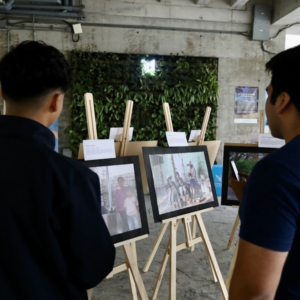
UTEC students enjoying A Rocha Peru’s photo exhibition (G. Rabasa, Nov 2024)

In 2024, A Rocha Peru is broadening its national reach with exhibitions in Lima at two key universities—Universidad Científica del Sur (UCSUR) and Universidad de Ingeniería y Tecnología (UTEC)—with which we have established strong collaborations. The exhibition, inaugurated on November 18th at UTEC, was a resounding success, with attendees expressing a keen interest in conservation.

The exhibition features a carefully curated selection of around 20 striking photographs that capture the biodiversity, environmental challenges, and the role of local communities in the La Libertad region. Taken by South African photographer Xavier Saer and other conservationists, these images showcase A Rocha Peru’s ongoing efforts, inspire student participation, and raise awareness about the urgent need to combat deforestation. The exhibition also highlights A Rocha Peru’s smaller initiatives, such as the Amazon Natural and Cultural Heritage Conservation Project and the Iglesia Verde Project.

We extend our gratitude to UTEC and UCSUR for their invaluable collaboration in bringing this exhibition to life. By using photography as a tool for education and advocacy, A Rocha Peru aims to inspire greater engagement in conservation efforts and help secure the future of the La Libertad Dry Forest for generations to come.

Handicraft Workshops Foster Sustainability

A Rocha Peru organized handicraft workshops for the local women’s artisan group in Pacasmayo.  The workshops focused on using renewable materials, promoting environmental awareness, and providing alternative sources of income. By linking traditional crafts to the health of the forest, these workshops encourage environmental stewardship and highlight the importance of sustainable resource management.

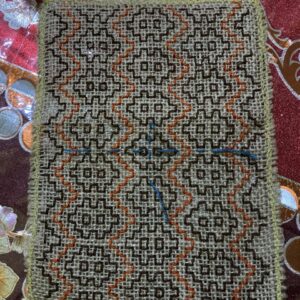
In August, the team organized two workshops for the Artisan Group. The first workshop introduced participants to the art of embroidering jute, a natural fiber, using designs inspired by the Moche culture.  The Moche culture is an ancient civilization from northern Peru renowned for its intricate art and iconography. Seven participants took part in this training, led by jute embroidery specialist. The session included an additional hands-on experience in Magdalena de Cao, located in the province of Ascope, to further enhance their skills.

Jute embroidery, August 2024


A second workshop focused on the recycling, reuse, and proper disposal of plastic bags. This session was led by an expert in plastic reuse, and was attended by 12 participants. The training emphasized practical ways to reduce plastic waste and creatively repurpose materials, reinforcing the community’s commitment to sustainability.  In September, a follow-up session took place in Magdalena de Cao.   Participants completed their jute embroidery projects featuring designs inspired by Moche culture. The craftswomen also visited a museum in Magdalena de Cao.  Here the women took part in an event that focused on crafts and culture. Afterwards, they received a guided tour of the museum’s exhibits, gaining further insight into the rich cultural heritage of the region.

These efforts are part of a broader initiative to create environmentally conscious community leaders who understand the value of conserving natural resources. By empowering the women of Pacasmayo with these skills, A Rocha Peru aims to foster greater economic resilience and promote the conservation of forest resources.


On the Search for Wild Flora

During a field trip to Polvorín in June, the A Rocha Peru team identified a wild flora species called Hualtaco (Loxopterygium huasango). This deciduous tree is native to equatorial coastal areas and dry forests in Cajamarca, Lambayeque, Piura, and Tumbes. Standing tall at up to 20 meters with its cylindrical stem and quirky, globe-like crown, the Hualtaco dazzles in the botanical world.  Regrettably, the Hualtaco faces imminent threats due to its high demand for use in parquet flooring, leading to its inclusion on Peru’s endangered species list under Supreme Decree N°043-2006-AG. Despite these challenges, the Hualtaco remains indispensable to the delicate balance of the dry forest ecosystem, providing a vital haven for biodiversity and sustainable livelihoods in rural communities. Urgent conservation measures are crucial to safeguard the Hualtaco and other species of the dry forest. By studying species in their natural habitat, field trips provide insights into the ecological roles and interactions of these plants within the ecosystem. This understanding is vital for developing effective conservation strategies that consider the broader ecological context.

The Dry Forest Buzz

A Rocha Peru’s beekeeping initiatives continue to thrive and expand. Originally installed in the Tronco Prieto forest, the apiaries had to be relocated due to restrictions on beekeeping activities and the absence of permission from the community of San Pedro de Lloc, the forest’s owners. The beekeeping operations have since found a new home in the privately-owned Venturosa Dry Forest.  The relocation led to a mutually beneficial agreement between A Rocha Peru and the landowner. In a generous move, the landowner has decided to donate his share of the honey harvest to the local school, starting from the second harvest. The remaining income supports A Rocha Peru and dry forest conservation efforts, demonstrating a collaborative spirit that benefits both education and environmental conservation.  The presence of apiaries in the Venturosa Dry Forest brings significant advantages to the landowner’s farm and forest, particularly through essential pollination. Additionally, A Rocha Peru ensures meticulous care and maintenance of the forest. The landowner also uses these activities as educational opportunities for his students, who are active members of A Rocha Peru’s environmental club.                                                                    With the installation of apiaries in the dry forests, A Rocha Peru’s efforts are yielding high-quality honey now marketed under the official label, BoscoVivo, meaning “Living Forest.” This year, A Rocha Peru is set to advance its beekeeping initiatives with a renewed focus on community involvement and sustainability. One of the upcoming workshops will concentrate on installing new beehives, a key element already included in the workshop budget. This builds on previous workshops where several hives were successfully installed and are now being managed by A Rocha Peru.   In addition to new hive installations, we expect that this year’s workshops will cover a variety of beekeeping-related activities, such as propolis production, pollen collection, and other essential practices. These activities aim to enhance participants’ skills and knowledge, contributing to the project’s long-term self-sustainability and the broader institutional sustainability of A Rocha Peru.  A Rocha Peru is also launching pilot beekeeping activities to create greater involvement of local families committed to dry forest conservation. This project will provide one or two families with beehives, enabling them to benefit directly from honey production. The initiative includes ongoing monitoring and support from A Rocha Peru to ensure the hives’ success and the project’s sustainability.  By integrating beekeeping into the local community, A Rocha Peru aims to empower families, foster environmental stewardship, and promote sustainable livelihoods. This holistic approach supports conservation efforts and enhances the economic resilience of the involved communities.

Connecting youth to nature

By Grazia Rabasa

In our ongoing commitment to environmental conservation, A Rocha Peru is excited to share some of the progress of our latest initiative, the Amazon Natural and Cultural Heritage Conservation project.  Central to our project is the importance of preserving the Amazon rainforest and the rich cultural heritage of the Machigengan people.

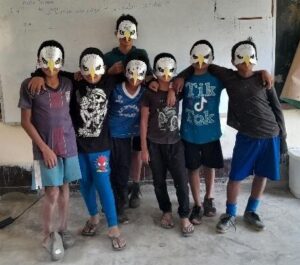
Eco-club Workshop creating bird masks, August 2023

One of our project objectives is to enhance environmental awareness among the younger generation about the conservation of the forest, flora, and fauna. In 2023, the pilot created an eco-club called Katsari Forest in the primary school in Monte Carmelo.  The eco-club has provided 66 enthusiastic students a platform to actively engage in environmental conservation efforts.  Through a series of workshops, including discovering the world of birds, getting to know the tropical forests and discussions on deforestation, we are empowering these young minds to become advocates for their environment.

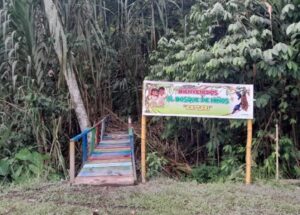
Bridge access to the Katsari children’s forest, August 2023

Moreover, our project extends beyond education to practical solutions like building a bridge to access the Bosques de los Niños (Children’s Forest).  This bridge not only facilitates the children’s exploration of the forest but also symbolizes our dedication to fostering a deep connection between communities and their natural surroundings.  By empowering communities, preserving cultural heritage, and safeguarding biodiversity, we are laying the groundwork for a sustainable future for both people and the planet.